Thursday, November 19, 2009

Palestine and Israel Conflict : Part 3


I would like to say happy holiday to all fellow teachers and students who started school holiday in Malaysia from today until early January 2010. Please take this opportunity during this holiday by doing things that are beneficial to the development of self, family, community and country. For me, this is the time i will use for browsing the Internet, reading an interesting books and sightseing with my family.


Today we have reached the third part in a series of conflicts between Israel and Palestine.

In this part, the question we should ask ourself is :

1. Is it true that there are different treatment between Israel and the Arab population in Gaza and the West Bank?

2. Is it true that Syria is not under threat of attack from Israel because they do not allow their country to be use as a place to attack Israel's position?

3. Is it true that Israel feel easy to deal with Fatah compared with Hammas?

4. Is it true that the Palestinian Arab people experience poverty because they lost their jobs because they work in areas controlled by Israel?

I have a great pleasure if the arab palestine can contact me to facilitate me in getting information from the actual perspective of Palestinian Arab people.

By the way, I also want to thank the people of Israel that has come forward with the information about the Israeli-Palestine conflict from their perspective.

So, with their help, we will get the clear picture about the issue we are facing now.

Let see what happen in Israel and Palestine.......


1968 - 1970 - War of Attrition

The War of Attrition (Al-Istinsaf) was a limited war fought between Egypt and Israel from 1968 to 1970. It was initiated by Egypt as a way to recapture the Sinai from Israel, which had controlled it since the Six-Day War. The war ended with a ceasefire signed between the countries in 1970 with frontiers at the same place as when the war started.

The war began in June 1968 with sparse Egyptian artillery bombardment of the Israeli front line on the east bank of the canal. More artillery bombardments in the following months killed some Israeli soldiers. IDF's retaliation came on the night of October 30 when heli-borne commandos destroyed Egypt's main electricity supply. The blackout caused Nasser to cease hostilities for a few months while fortifications around hundreds of important targets were built. Simultaneously Israel reinforced its position on the east bank of the Suez Canal by constructing the Bar Lev Line, a set of thirty-five small forts running north-south along the canal guarded by infantry.

In February 1969 Egypt was ready for the next round. President Nasser declared the cease-fire from November the previous year to be null and void. On March 8 Egyptian artillery began massive shelling of the Bar Lev Line causing many Israeli casualties. Soviet MiG-21 fighters were also employed in the attack. The IDF retaliated with deep raids into Egyptian territory causing severe damage. In May, June and July 1969, 47 IDF soldiers were killed and 157 wounded. Although Egypt suffered many times more casualties than Israel, Egypt continued with its aggressive stance. Israel managed to sustain the high casualty rate but was hard-pressed to find a definite solution to the conflict.

In July Israel escalated by attacking with the Israeli Air Force (IAF). On July 20 and July 24 almost the whole IAF bombed the northern canal sector destroying anti-aircraft positions, tanks and artillery. The aerial offensive continued until December and reduced Egypt's anti-aircraft defence to almost nothing. It managed to reduce the artillery bombardment somewhat but shelling with lighter weapons and especially mortars continued.


On October 17, 1969 talks between the Superpowers began. It led to the Rogers plan that was publicized on December 9. It called for Egyptian "commitment to peace" in exchange for Israeli withdrawal from the Sinai. Both parties strongly rejected the plan. President Nasser instead opted to plead for more sophisticated weaponry from the Soviet Union to withstand the IAF's bombings. The Soviets initially refused to deliver the requested weapons.

On January 22, 1970, President Nasser secretly flew to Moscow to discuss the situation. His request for new SAM batteries (including the 3M9 Kub and Strela-2) were approved. Their deployment would require qualified personnel along with squadrons of aircraft to protect them from Israeli attacks. In effect, he needed Soviet troops in large numbers, something Moscow could not allow. He then threatened to resign, implying that Egypt might turn to Washington for help in the future.

Despite these losses the Soviets and Egyptians managed to press the air defenses closer and closer to the canal. The Soviet operated SAMs shot down a number of Israeli aircraft. Israel could not respond effectively. The SAM batteries would allow Egypt to move in artillery which in turn could threaten the Bar Lev Line. In April 1970 negotiations resumed, this time with the U.S. being the primary negotiator. A cease-fire agreement was reached on August 7. It was to last for three months and neither side was allowed to change "the military status quo within zones extending 50 kilometers to the east and west of the cease-fire line."


1968 - Battle of Karameh

In 1968, the city of Karameh served as the political and military headquarters of the Palestinian al-Fatah movement. Israeli military forces entered the city in search of the Palestinian leadership, which the Israelis labelled as terrorists. In this battle, the heavily armed and technologically advanced Israeli military was rebuffed and forced to retreat, suffering a blow to their reputation while heartening the Palestinian resistance to Israel.


The Battle of Karameh set up a series of events leading to Black September in Jordan, in which King Hussein ordered the Jordanian army to crush the emboldened Palestinian forces.


the Israel Defense Forces entered the village of Karameh on March 21, 1968. The Israelis, who aimed to destroy Fatah in their assault, were unsuccessful and quickly withdrew. Arafat managed to leave Karameh at night after being informed of the impending attack. King Hussein gave orders to the Jordanian forces to not intervene but the Jordanian general Mash'hor Haditha and some Jordanian offciers ignored their king's orders and engaged the battle. The arrival of Jordanian troops in full-force shifted the tide of the battle and managed to inflict serious damage on the IDF. In fact, the Jordanian Army's intervention was not expected at all. An estimated 28 Israeli soldiers were killed and 80 wounded; the IDF also lost four tanks. Although the Jordanian Army had been decisive, the incident was a public relations coup for the PLO and Arafat in particular. The Karameh battle boosted Palestinian morale and gave the PLO additional prestige within the Arab community.


1969 - Arafat become the Chairman of PLO

February 2, 1969Yasser Arafat, head of the Fatah party, is appointed chairman of the Palestinian Liberation Organization, replacing Ahmad Shukeiri, after Fatah becomes the dominant force in the PLO.

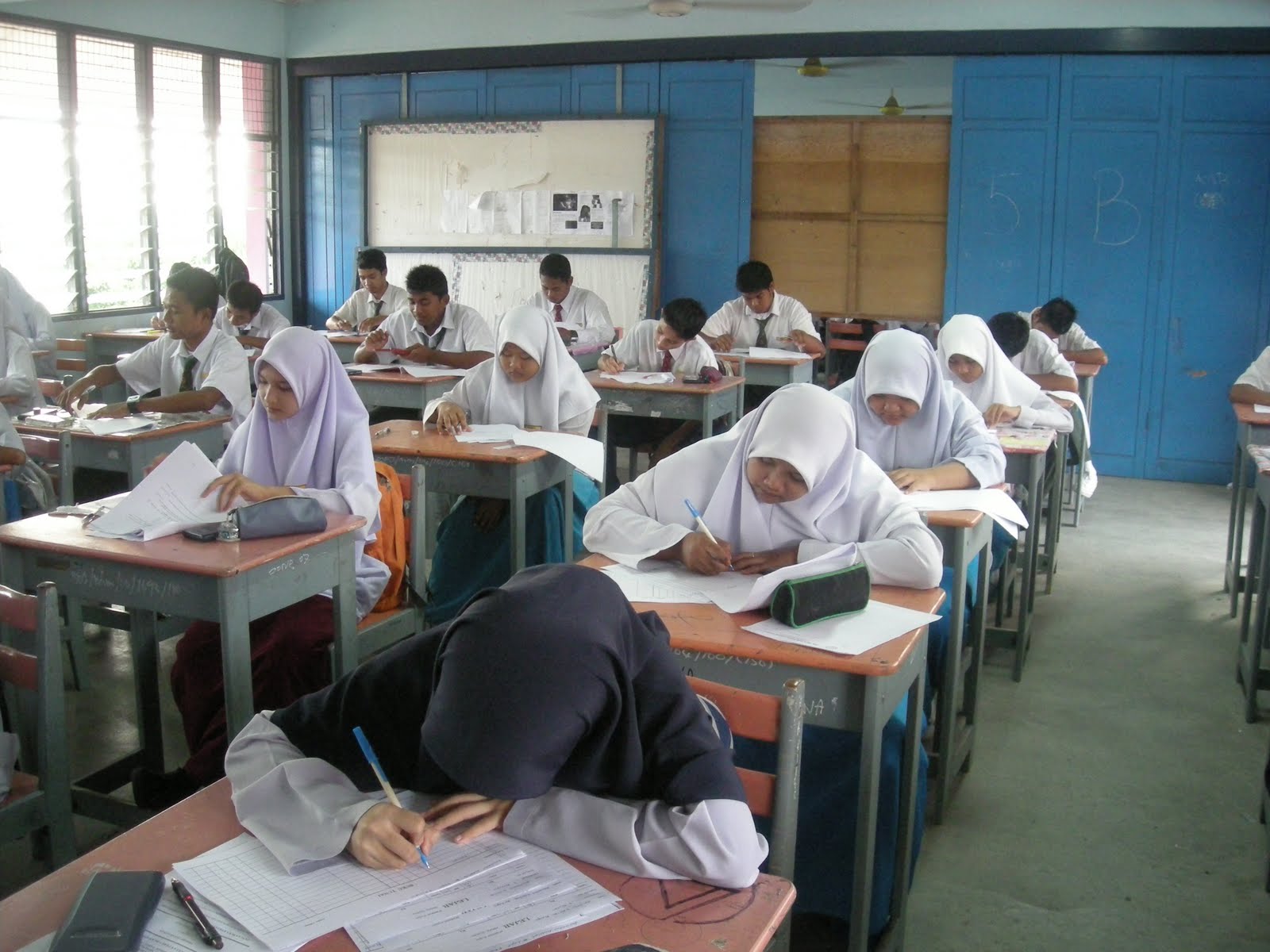
Dedication to all students for the year 2009.


IZZAT FAIZ B. KHOUI-RUL ANUAR
MOHD FARID BIN ABU BAKAR
THINNAKORN A/L SOM BOON
AMPHON A/P BOON NAM
FAUZIAH BT. DAUD
LALITA A/P IWIN
NUR AWANIS BT SHARIZAN
NUR IZAIDAH BT MAT AKHIR
NUR WAHIDAH BT ANGKASAH
SAWANI BT SAAD
SITI SAFRA SYAZWANI BT ABD RAHMAN
MOHAMMAD SYAZWAN BIN KASIM
MOHD AZIZI BIN ISMAIL
WAN MOHD AZIZUL BIN WAN JUSOH
YUSRI BIN YUSUF
AZILA BT KARIM
NOOR FARHANA BT. ABD RAHMAN
NOR IZZAYANTI BT. NORDIN
NOR SHAZLIN AB RAHIM
NURUL HUDA BT. GHAZALI
NURUL SHUHADA BT. ABU BAKAR
ROZIFA BT. IBRAHIM
SITI FAIRUZ BT AZHER


MUHAMMAD REDZUAN HALIM
MUHAMMAD SYAKIRIN ABD RAHMAN
LOH HAY LIN
MOHD SOHAIRI
AHMAD RIDZUAN MANSOR
PHARAKITH A/L SOM BOON
RAYRAI A/P PHONG
ABD RAHMAN IDRIS
NAJIHAH BT MUZAMMIR
NORHAFIZAH ABD AZIZ
RASHIDAH AHMAD
SAIDATUL NABILAH KAPLI
NURUL ERNANI KERYA
MOHD ALHAFIZ ABD RAHIM
MOHD AKMAL MOHD GHANI
NORFAIZAL MUSTAFFA
MOHD FIKRI ABD MAJID
FAREHAH BAKRY
NOORFAZRIANI MD NOOR
NOR HANIS ZAMYLIA BT. AMIN
NORBASHERA BT BUSTAMI
NURIN SUSANI
MUHAMMAD IKHWAN SYAFIK
NOREY A/P JIT SINGH
SOMCIT A/P CHUI
SITI NADIAH SHAHIRAH BT SHARIDAN
JAMAL ZAINON
NORFATIN SALMIE ABU BAKAR
AMIR ABDULLAH
REDZUAN ROSLAN
ZUHEDA BT. ABU HASAN

Tomorrow is the last day of school.

This means that tomorrow is the last day I met you all.

After a year we interact in the atmosphere of teaching and learning process,

then tomorrow will mean that you all scattered on this earth to live as students, workers and of course as an adult.

It is really difficult for me to say good bye.
However I will try to deal with a smile because this is life.
My message to all of you....my beloved student:

Be a useful to yourself, your family, your community and your country.
Be the best in all the things you do because all the benefit will certainly belongs to you later. (with god willing).

Do all the duties and responsibilities with honesty and sincerity.
Promote the process of improving knowledge and wisdom as the process continues throughout your life.

Be a good leader for all under your care.
Always ready for change because those who survive in this world are those who always want to change towards the good in accordance with current needs.
One last word that i would like to say...thank you dan i love you....


My Heart Will Go On

Song writers: Horner, James; Jennings, Will;

Every night in my dreams
I see you, I feel you
That is how I know you go on

Far across the distance
And spaces between us
You have come to show you go on

Near, far, wherever you are
I believe that the heart does go on

Once more you open the door
And you're here in my heart
And my heart will go on and on

Love can touch us one time
And last for a lifetime
And never let go till we're gone

Love was when I loved you
One true time I hold to
In my life we'll always go on

Near, far, wherever you are
I believe that the heart does go on

Once more you open the door
And you're here in my heart
And my heart will go on and on

You're here, there's nothing I fear
And I know that my heart will go on

We'll stay forever this way
You are safe in my heart
And my heart will go on and on

Monday, November 16, 2009

Palestine and Israel Conflict: Part 2


Hi, now we meet again in the second part.

Last week I received a message from the people of Israel. He said for years they (israeli) feel quite secure when visiting and shopping in Gaza and Jericho ... but today relations between them (palestinian and israeli) switch to enemies only because the exchange leadership between both sides .They suddenly become an enemy without a clear reason.

If it is true as presented to me, the question should we think there is a party that tries to take advantage of the difficulties people in both parties to make a profit.


So what is the role of their leaders actually ?

What role should be implemented by the United States, European Union and the OIC?

Let see what happen in Palestine and Israel......

1964 - PLO established

February 3, 1964The Palestine Liberation Organization is founded in Cairo with Ahmad Shuqeiri as its leader. Even though Ahmad Shuqeiri is the official leader, the organization is more or less controlled by the Egyptian government.

1967 - The Six Days War

After the Suez-Sinai war Arab nationalism increased dramatically, as did demands for revenge led by Egypt's president Nasser. The formation of a united Arab military command that massed troops along the borders, together with Egypt's closing of the Straits of Tiran and Nasser's insistence in 1967 that the UNEF leave Egypt, led Israel to attack Egypt, Jordan, and Syria simultaneously on June 5 of that year.

The war ended six days later with an Israeli victory. Israel's French-equipped air force wiped out the air power of its antagonists and was the chief instrument in the destruction of the Arab armies.


The Six Days War left Israel in possession of Gaza and the Sinai Peninsula, which it took from Egypt; Arab East Jerusalem and the West Bank, which it took from Jordan; and the Golan Heights, taken from Syria. Land under Israel's jurisdiction after the 1967 war was about four times the size of the area within its 1949 armistice frontiers. The occupied territories included an Arab population of about 1.5 million.

The occupied territories became a major political issue in Israel after 1967. The right and leaders of the country's orthodox religious parties opposed withdrawal from the West Bank and Gaza, which they considered part of Israel. In the Labor Alignment, opinion was divided; some Laborites favored outright annexation of the occupied territories, others favored withdrawal, and some advocated retaining only those areas vital to Israel's military security. Several smaller parties, including the Communists, also opposed annexation. The majority of Israelis, however, supported the annexation of East Jerusalem and its unification with the Jewish sectors of the city, and the Labor-led government formally united both parts of Jerusalem a few days after the 1967 war ended. In 1980 the Knesset passed another law, declaring Jerusalem “complete and united,” Israel's eternal capital.

The 1967 war was followed by an upsurge of Palestinian Arab nationalism. Several guerrilla organizations within the Palestine Liberation Organization (PLO) carried out guerrillas attacks on Israeli targets, with the stated objective of “redeeming Palestine.” guerrillas attacks on Israelis targets at home and abroad unified public opinion against recognition of and negotiation with PLO, but the group nevertheless succeeded in gaining widespread international support, including UN recognition as the “sole legitimate representative of the Palestinians.”.


1967 - Khartoum Resolution

The Khartoum Resolution of September 1, 1967 was issued at the conclusion of a meeting between the leaders of eight Arab countries in the wake of the Six-Day War. The resolution, which formed a basis of the policies of these governments toward Israel until October War of 1973 called for:

Continued war against Israel Ending the Arab oil boycott declared during the Six-Day War An end to the war in Yemen Economic assistance for Egypt and Jordan

The resolution contains in paragraph 3 what became known as "the three nos" of Arab-Israel relations at that time.

No peace with Israel

No recognition of Israel

No negotiations with Israel

1967 - Palestinian Refugees

In 1967 war, Israel launched air strikes against Palestinian cities and towns in Gaza strip and the West Bank, the air raids pushed thousands of Palestinians to flee their villages and towns to seek shelter out of the range of Israeli artillery bombardment. The war resulted in the displacement of more Palestinians. 350,000 people were forced out by terror, expelled or left from fear. More camps were constructed to absorb this large number of refugees.

The Security Council and the General Assembly called on Israel on 14th June 1967 and 14th July 1967 to facilitate the return of these refugees. Israel pretended to comply. The Palestinians, having waited for 20 years in their miserable refugee camps hoping to move world conscience and trusting in the U.N. to allow them to return to their homes and restore their legitimate rights in their homeland, found it all in vain. The U.N. passed resolutions but did not enforce them, when they conflicted with the wishes of Israel and her guardian the U.S. world public opinion was deaf to the Palestinian cries while it was all ears to Zionist propaganda and demands to import 3,000,000 Russian Jews. Israel argued that the return of the Palestinian refugees will create more security problems for Israel. The Israeli attitude also applied to all Palestinians who left the country to seek jobs in the Gulf states, USA or Europe.

The Palestinians, finding all their country under Israeli occupation and its entire people either expelled or under alien rule, lost faith in the world community and came to realise that, even in this era of so-called civilization, International Law and U.N. Charter, might is right and what is lost by force can be regained only by force. They intensified, therefore, their resistance by guerrilla attacks against Israeli military personnel and objectives. The Israelis retaliated by ruthless bombardment using Phantom jets and napalm against the defenseless men, women and children in their refugee camps in Jordan, Lebanon and Syria. The Palestinian resistance was vilified by Zionist propaganda and their captured members were savagely tortured in Israeli hands.


Wednesday, November 11, 2009

Terima Kasih From Malaysia To The World


Terima Kasih


I would like to thank all friends who visited my blog. Hopefully our friendship will be more closely. Please come again.


Je tiens à remercier tous les amis qui ont visité mon blog. Espérons que notre amitié de plus près. S'il vous plaît revenez régulièrement.


وأود أن أشكر جميع الأصدقاء الذين زاروا بلدي بلوق. نأمل صداقتنا بشكل وثيق. يرجى الحضور مرة أخرى. تمنيات ، روسلي بن حميد.


我要感谢所有朋友谁访问我的博客。希望我们的友谊更加密切。请再来。 关心, 罗斯利本哈米德。


Jeg vil gerne takke alle de venner, som har besøgt min blog. Forhåbentlig vil vores venskab nærmere. du kommer igen. Hilsen,


Ik wil bedanken alle vrienden die mijn blog bezocht. Hopelijk is onze vriendschap sterker. Groeten,


Gusto kong pasalamatan ang lahat ng mga kaibigan na bumisita sa aking blog. Inaasahan namin na ang aming mga kaibigang mas malapit. mangyaring darating muli.


Ich möchte an alle Freunde, die mein Blog besucht danken. Ich hoffe, unsere Freundschaft enger. bitte wieder kommen. Grüße,

Haluan kiittää kaikkia ystäviä, jotka kävivät blogiin. Toivottavasti ystävyytemme tarkemmin


Θα ήθελα να ευχαριστήσω όλους τους φίλους που επισκέφθηκαν το blog μου. Ας ελπίσουμε ότι φιλία μας πιο κοντά. παρακαλούμε να έρθει ξανά.


אני רוצה להודות לכל החברים שביקר בבלוג שלי. יש לקוות החברות שלנו יותר מקרוב. בבקשה לבוא שוב.


मैं सब दोस्त हैं जो अपने ब्लॉग का दौरा किया धन्यवाद देना चाहूंगा. उम्मीद है कि हमारे और अधिक बारीकी से दोस्ती. कृपया फिर से आओ.


Vorrei ringraziare tutti gli amici che hanno visitato il mio blog. Speriamo che la nostra amicizia più da vicino.


私は私のブログを訪問したすべての友人に感謝したいと思います。うまくいけば、私たちの友情より密接に。もう一度やり直しています。


누가 내 블로그를 방문한 모든 친구에게 감사하고 싶습니다. 다행히 우리의 우정이 더 밀접하게. 제발 다시 한번.

Jeg vil gjerne takke alle venner som besøkte bloggen min. Forhåpentligvis vennskapet vårt nærmere


Me gustaría dar las gracias a todos los amigos que han visitado mi blog. Esperemos que nuestra amistad más estrecha. Por favor, venga de nuevo.


Jag vill tacka alla vänner som besökt min blogg. Förhoppningsvis har vår vänskap närmare


ฉันต้องการจะขอบคุณเพื่อนผู้เยี่ยมชมบล็อกของฉัน. หวังว่ามิตรภาพของเราอย่างใกล้ชิด. โปรดมาอีกครั้ง.

Kim benim blogu ziyaret eden tüm arkadaşlar teşekkür ederim. Umarım dostluğumuzu daha yakından. lütfen tekrar gel.


Because you are my friend

Because you are my friend,

my life is enriched in a myriad of ways.

Like a cool breeze on a sweltering day,

like a ray of sunshine parting glowering clouds,

you lift me up.

In good times, we soar,like weightless balloonsover neon rainbows.

In bad times, you are soothing balm for my pummeled soul.

I learn so much from you;

you help me see old things in new ways.

I wonder if you are awareof the bright seeds you are sowing in me.

I'm a better person for knowing you,

so that everyone I interact with is touched by your good effect on me.

You relax me, refresh me, renew me.

Your bounteous heart envelops mein joy and love and peace.

May your life be filled with dazzling blessings,

just as I am blessed by being your friend.


By Joanna Fuchs


Friday, November 6, 2009

Lonely Planet: The top 10 countries for 2010 (MALAYSIA)


Welcome to Malaysia
Selamat Datang" means the warmest welcome in Bahasa Malaysia.

Covering an area of 127,316 square miles (336,700 sq. km), Malaysia consists of two regions; Peninsular Malaysia (States of Federation of Malaya) extending south-south-east from the border of Thailand and the states of Sabah and Sarawak located on the northwestern coastal region of the island of Borneo. The natural vegetation of Malaysia is tropical rain forest which, on the plains, has been replaced by 4 million acres of rubber plantations, palm oil, paddy fields and, of course, modern cities. In the highlands there is considerable variation in flora.

The annual average temperature is between 77°F (25°C), and 83°F (28°C) in the lowlands, the mean minimum temperature seldom falls below 72°F(22°C). At hill resorts: uniform temperature is lower. Days are generally sunny and warm, humidity averaging 85%-90%. Nights are usually cool and comfortable.

Malaysia is a multiracial country with a population of approximately 24.4 million. This consists of the main racial groups of Malays, Chinese and Indians and a very diverse group of indigenous people in Sabah and Sarawak.

For years, our tourism authirities have been trying to get the country mentioned in some manner in international travel magazines, to get a leg up on neighbouring countries. Afterr all. we are all selling the same thing - sun, sea, beaches, culture, food and, of course, value for money.

This week, the Tourism Ministry has hit pay dirt when the ever popular travel guide Lonely Planet listed country as one af top 10 countries to visit when famed hitchhiker's guide released its Best in Travel 2010 on Monday.

Although Lonely Planet started out life as a cheapskate guide to travel the world, it has since grown to be more than that.

This year's report is the fifth in its annual collection of the best palaces to go and best things to do in year ahead.

Malaysia, according to Lonely Planet report, "is a clever choice for travellers on the lookout for a bargain."

Last year, we welcomed 22 million tourists who spent RM49.5billion.


Lonely Planet: The top 10 countries for 2010

Want a sneak peek into the future?

1. El Salvador
El Salvador sneaks up on you: in lefty lounge bars in San Salvador, at sobering war memorials and museums, and along lush cloud-forest trails; it’s a place of remarkable warmth and intelligence, made all the more appealing for being so unexpected. Travellers tend to skip El Salvador, wooed by marquee destinations such as Guatemala and Costa Rica, and unnerved by stories of civil war and gang violence. But the war ended almost 20 years ago, and crime, while serious, is almost exclusively played out between rival gangs; tourists are virtually never involved. And though El Salvador has fewer protected areas than its neighbours, you get them practically to yourself – including pristine forests, active volcanoes and alpine lakes.
2. Germany
Some countries are simply allowed to be, but
Germany has had to reinvent itself more times than Madonna. And it has done so again since 1990, when reunification brought an end to nearly three decades of division. In year 20 after its latest rebirth, Germany is still a country where you can witness history in the making. Head to Hamburg, where an entire new quarter is being wrested from the detritus of a 19th-century harbour. Or to Dresden, where the domed Frauenkirche church is once again the diamond in the shining tiara that is the city’s famous skyline. And, of course, to Berlin, whose climate of openness spawns more creative experimentation than a Petri dish on Viagra.
3. Greece
Seldom does a travel destination satisfy the blurbs that shout ‘has something for everyone’ - but Greece truly does. Whether you’re there to poke around ancient ruins, soak in the sun on idyllic beaches, or party till you drop, Greece will leave you clambering for more. It’s guilt-free travel – a slice of history served alongside a healthy slice of hedonism – and everyone seems happy. You get to marvel at the dazzling clarity of the light and the waters, the floral aromas that permeate the air, the pervading sense of spirit – and then sit down to contemplate it all while consuming that great Greek combination of ouzo and octopus!
4. Malaysia
Malaysia often gets criticised as being mild in comparison with its grittier neighbours, Thailand and Indonesia. It’s true, natural disasters and coups only seem to happen across its borders, the roads don’t have too many potholes, buses and trains have air-con and plush seats, and hotels are of international standard. While troubles are few, visiting Malaysia lets you leap into the jaws of one of the most interesting parts of Southeast Asia’s roaring cultural smorgasbord – and not be too worried about it. Cheap connections to Europe and great exchange rates mean that you won’t get eaten up by your wallet either.
5. Morocco
‘Hello, bonjour, salaam alaykum, labes?’ Street greetings sum up everything you need to know about Morocco in a word: it’s Berber and Arab, Muslim and secular, Mediterranean and African, worldly wise and welcoming. Morocco sees how the Middle East is portrayed via satellite news and the internet, and is as concerned with violent threats and abuses of power as anyone else in the modern world. But as you’ll see, most Moroccans are plenty busy working to get by, get their kids through school and greet the king’s planned 10 million visitors by 2010 with the utmost hospitality. Every visitor helps Moroccans realise these goals by creating new economic opportunities, and can make a Moroccan’s day by returning the greeting: ‘Hello, good day, may peace be upon you, are you happy?’
6. Nepal
But for the Himalaya, Nepal would probably be stuck in the shadow of India – but it’s hard to cast a shadow on a country that includes the highest point on earth, the summit of Mt Everest. Over the last decade, Nepal has seen its share of troubles, but 2008 was a watershed year – the rebels became the government, the kingdom became a republic and the king became a civilian. With the fall of the monarchy, the sound of temple bells has replaced the stomp of army boots and peace has returned to Shangri-La.
7. New Zealand
Recommending New Zealand’s too obvious, right? You’re looking for something a bit edgier, under the radar or further off the beaten track. But there’s wisdom in the old saying, ‘If it ain’t broke, don’t fi x it’, and last time we checked the land of Maori and hobbits certainly didn’t need repairing. NZ’s checklist of essential experiences remains as strong as ever. Spectacular landscapes abound, from sea-level rainforests to plunging glaciers, geothermal springs and barren volcanic plains. Add a hearty pinch of lens-friendly wildlife, proud Maori culture, and fine food and drink, and it’s easy to see why the natives are so chilled.
8. Portugal
Skirting along the southwestern edge of the Iberian Peninsula, the once-great seafaring nation of Portugal today straddles two very different worlds. For purists, this is a land of great tradition, of saints-day festivals where ox-drawn carts still lumber through flower-strewn streets, and ancient vineyards bring sleepy medieval villages to life during the annual harvest. Meanwhile, in other parts of the country, something decidedly more modern is transpiring. Old city centres, long ago abandoned by the young and upwardly mobile in favour of the suburbs, are slowly being revitalised. A new wave of boutiques, art galleries and cafes are finding new homes in once crumbling old buildings, and locals are beginning to rediscover the allure of vibrant downtown areas.
9. Suriname
South America’s smallest country, both in area and population, is easily one of its most diverse. Some three quarters of Suriname’s people are descended from Chinese, Javanese and Indian labourers that arrived in the 18th century, and West African slaves in the 17th. Add indigenous Amerindians and Lebanese, Jewish and Dutch settlers, and you have the makings for a lot of ethnic tension, right? Fortunately, wrong. Suriname is known for its peacefully coexisting cultures, most emblematically represented by the country’s biggest mosque and synagogue situated side by side in the capital Paramaribo. With everyone speaking different languages, celebrating different holidays and worshipping in different temples, visiting Suriname is really like hitting several countries at once.
10. USA
Suddenly the USA is cool again! Be it from Barack Obama, Abraham Lincoln’s 200th birthday last year, or just tightened budgets during the recession, but more Americans (even hipsters) are looking backwards – and foreigners too – and taking in traditional American historical sites, beginning with Washington DC’s freebie zone of museums and heroic monuments
M A L A Y S I A 2010

Palestine and Israel Conflict: Part 1


Photographer’s Note


Jerusalem , Yerushaláyim is the capital of Israel and its largest city in both population and area, with a population of 747,600 residents over an area of 125.1 square kilometres (48.3 sq mi) if disputed East Jerusalem is included. Located in the Judean Mountains, between the Mediterranean Sea and the northern tip of the Dead Sea, modern Jerusalem has grown far beyond the boundaries of the Old City.The city has a history that goes back to the 4th millennium BCE, making it one of the oldest cities in the world. Jerusalem is the holiest city in Judaism and the spiritual center of the Jewish people, contains a number of significant ancient Christian sites, and is considered the third-holiest city in Islam. Despite having an area of only 0.9 square kilometer (0.35 square mile), the Old City is home to sites of key religious importance, among them the Temple Mount, the Western Wall, the Church of the Holy Sepulchre, the Dome of the Rock and al-Aqsa Mosque. The old walled city, a World Heritage site, has been traditionally divided into four quarters, although the names used today—the Armenian, Christian, Jewish, and Muslim Quarters—were introduced in the early 19th century. The Old City was nominated for inclusion on the List of World Heritage Sites in danger by Jordan in 1982. In the course of its history, Jerusalem has been destroyed twice, besieged 23 times, attacked 52 times, and captured and recaptured 44 times.Today, the status of Jerusalem remains one of the core issues in the Israeli-Palestinian conflict. Israel's annexation of East Jerusalem has been repeatedly condemned by the United Nations and related bodies, and Palestinians foresee East Jerusalem as the capital of their future state. In the wake of United Nations Security Council Resolution 478 (passed in 1980), most foreign embassies moved out of Jerusalem, although some countries, such as the United States, still own land in the city and pledge to return their embassies once political agreements warrant the move.(from Wikipedia, edited by serp2000)


Palestine and Israel Conflict: Part 1


Every human being want to live in peace. But not all people get a chance to live in a peaceful world . Today i like to write about conflict between Israel and Palestine. I would like to invite all of you to try to understand the history of the beginning of this conflict until the present.


One question that I want to ask you is why all these bad things continue to happen?

Whether people have lost all the effort to achieve peace?

Where is our humanity ?

Do we want to see another human suffering throughout their life?


Since I was born in this world (1966), relationship between Palestine and Israel never peaceful.

In my opinion, we are able to live peaceful if we are willing to compromise and ready to achieve mutual understanding between each other.


Until this time my dream is that Israel and Palestine conflict ended immediately. As a Malaysian, I want to proudly proclaim that peace is a commodity that we have and we can teach others how to achieve it.

In order to understand this conflict, it's good for us to understand the historical relationship between two parties involved.

Let see what happen in Palestine and Israel......


3'RD MILLENNIUM BC


3'rd millennium BC : The Canaanites were the earliest known inhabitants of Palestine. They became urbanized and lived in city-states, one of which was Jericho . They developed an alphabet. Palestine's location at the center of routes linking three continents made it the meeting place for religious and cultural influences from Egypt, Syria, Mesopotamia, and Asia Minor. It was also the natural battleground for the great powers of the region and subject to domination by adjacent empires, beginning with Egypt in the 3d millennium BC.


The first know people in the lands of Palestine were the Canaanites how are Arab from Arab peninsula, they have their own language and culture.Palestine was the land of Palestinian Arab at all ages, Hebrew came to Palestine from Egypt during the third millennium before century, and established a kingdom for a limited number of years then other nations ended there kingdom and ruled the area. Hebrew presence in Palestine was ended since about 130 years after Jesus birth. Arab ruled the area from 638 AD and were always there until today, there introduce Islam, some Arab from deferent countries came and lived in Palestine from the early years to learn and educate the Palestinians. Some of the locals Palestinian converted to Islam and the Islamic rulers give a wide option to every body to keep his religion therefore, there is considerable number of Christian in Palestine but all has adopted the Islamic culture and Arabic language.All the Arab countries know today was under one Islamic empire rule, and it was consider as an emirate or state linked to the capital of the Islamic empire.


2'ND MILLENNIUM BC


2'rd millennium BC : Egyptian hegemony and Canaanite autonomy were constantly challenged by such ethnically diverse invaders as the Amorites, Hittites, and Hurrians. These invaders, however, were defeated by the Egyptians and absorbed by the Canaanites, who at that time may have numbered about 200000.


14th century BC : Egyptian power began to weaken, new invaders appeared: the Hebrews, a group of Semitic tribes from Mesopotamia, and the Philistines (after whom the country was later named), an Aegean people of Indo-European stock.


1230 BC : Joshua conquered parts of Palestine. The conquerors settled in the hill country, but they were unable to conquer all of Palestine.


1125 BC : The Israelites, a confederation of Hebrew tribes, finally defeated the Canaanites but found the struggle with the Philistines more difficult . Philistines had established an independent state on the southern coast of Palestine and controlled the Canaanite town of Jerusalem.


1050 BC : Philistines with there superior in military organization and using iron weapons, they severely defeated the Israelites about 1050 BC .


1'ST MILLENNIUM BC


1000 BC : David, Israel's great king, finally defeated the Philistines, and they eventually assimilated with the Canaanites . The unity of Israel and the feebleness of adjacent empires enabled David to establish a large independent state, with its capital at Jerusalem.


922 BC : Under David's son and successor, Solomon, Israel enjoyed peace and prosperity , but at his death in 922 BC the kingdom was divided into Israel in the north and Judah in the south .


722-721 BC : When nearby empires resumed their expansion, the divided Israelites could no longer maintain their independence . Israel fell to Assyria.586 BC : Judah was conquered by Babylonia, which destroyed Jerusalem and exiled most of the Jews living there. Nebuchadnezzar entered Jerusalem. The Temple was sacked and set fire to, and razed to the ground. The Royal Palace and all the great houses were destroyed, the population carried off in chains to Babylon. And they lamented on their long march into exile.


539 BC : Cyrus the Great of Persia conquered Babylonia and he permitted the Jews to return to Judea, a district of Palestine. Under Persian rule the Jews were allowed considerable autonomy. They rebuilt the walls of Jerusalem and codified the Mosaic law, the Torah, which became the code of social life and religious observance. The Jews were bound to a universal God.


333 BC : Persian domination of Palestine was replaced by Greek rule when Alexander the Great of Macedonia took the region. Alexander's successors, the Ptolemies of Egypt and the Seleucids of Syria , continued to rule the country . The Seleucids tried to impose Hellenistic (Greek) culture and religion on the population.


141-63 BC : Jews revolted under the Maccabees and set up an independent state.


132-35 BC : Jews revolts erupted, numerous Jews were killed, many were sold into slavery, and the rest were not allowed to visit Jerusalem. Judea was renamed Syria Palaistina.


63 BC : Jerusalem was overrun by Rome. Herod was appointed King of Judea. He slaughtered the last of the Hasmoneans and ordered a lavish restoration and extension of the Second Temple. A period of great civil disorder followed with strife between pacifists and Zealots, and riots against the Roman authorities.


37-4 BC : During the rule of King Herod the Great Jesus of Nazareth, peace be upon him was born. And years after, he began his teaching mission. His attempts to call people back to the pure teachings of Abraham and Moses were judged subversive by the authorities. He was tried and sentenced to death; "yet they did not slay him but only a likeness that was shown to them."


1-999 AD


70 AD : Titus of Rome laid siege to Jerusalem. The fiercely defended Temple eventually fell, and with it the whole city. Seeking a complete and enduring victory, Titus ordered the total destruction of the Herodian Temple. A new city named Aelia was built by the Romans on the ruins of Jerusalem, and a temple dedicated to Jupitor raised up.


313 AD : Palestine received special attention when the Roman emperor Constantine I legalized Christianity. His mother, Helena, visited Jerusalem, and Palestine, as the Holy Land, became a focus of Christian pilgrimage. A golden age of prosperity, security, and culture followed. Most of the population became Hellenized and Christianized .


324 AD : Constantine of Byzantium marched on Aelia. He rebuilt the city walls and commissioned the Church of the Holy Sepulchre, and opened the city for Christian pilgrimage.


29-614 AD : Byzantine (Roman) rule was interrupted , however , by a brief Persian occupation and ended altogether when Muslim Arab armies invaded Palestine and captured Jerusalem in AD 638 .


638 AD : The Arab conquest began 1300 years of Muslim presence in what then became known as Filastin. Eager to be rid of their Byzantine overlords and aware of their shared heritage with the Arabs, the descendants of Ishmael, as well as the Muslims reputation for mercy and compassion in victory, the people of Jerusalem handed over the city after a brief siege. They made only one condition, That the terms of their surrender be negotiated directly with the Khalif 'Umar in person. 'Umar entered Jerusalem on foot. There was no bloodshed. There were no massacres. Those who wanted to leave were allowed to, with all their goods. Those who wanted to stay were guarantee protection for their lives, their property and places of worship.Palestine was holy to Muslims because the Prophet Muhammad had designated Jerusalem as the first qibla (the direction Muslims face when praying) and because he was believed to have ascended on a night journey to heaven from the the old city of Jerusalem (al-Aqsa Mosque today) , where the Dome of the Rock was later built. Jerusalem became the third holiest city of Islam. The Muslim rulers did not force their religion on the Palestinians, and more than a century passed before the majority converted to Islam. The remaining Christians and Jews were considered People of the Book. They were allowed autonomous control in their communities and guaranteed security and freedom of worship. Such tolerance was rare in the history of religion . Most Palestinians also adopted Arabic and Islamic culture. Palestine benefited from the empires trade and from its religious significance during the first Muslim dynasty, the Umayyads of Damascus.


750 AD : The power shifted to Baghdad with the Abbasids, Palestine became neglected. It suffered unrest and successive domination by Seljuks, Fatimids, and European Crusaders. It shared, however, in the glory of Muslim civilization, when the Muslim world enjoyed a golden age of science, art, philosophy, and literature. Muslims preserved Greek learning and broke new ground in several fields, all of which later contributed to the Renaissance in Europe. Like the rest of the empire, however, Palestine under the Mamelukes gradually stagnated and declined.


1000-1899 AD


1517 AD : The Ottoman Turks of Asia Minor defeated the Mamelukes, with few interruptions, ruled Palestine until the winter of 1917-18. The country was divided into several districts (sanjaks), such as that of Jerusalem. The administration of the districts was placed largely in the hands of Arab Palestinians, who were descendants of the Canaanites. The Christian and Jewish communities, however, were allowed a large measure of autonomy. Palestine shared in the glory of the Ottoman Empire during the 16th century, but declined again when the empire began to decline in the 17th century.


1831-1840 AD : Muhammad Ali, the modernizing viceroy of Egypt, expanded his rule to Palestine . His policies modified the feudal order, increased agriculture, and improved education.


1840 The Ottoman Empire reasserted its authority, instituting its own reforms . 1845 Jewish in Palestine were 12,000 increased to 85,000 by 1914. All people in Palestine were Arabic Muslims and Christians.


1897 the first Zionist Congress held Basle, Switzerland, issued the Basle programme on the colonization of Palestine.


1900-1946


1904 the Fourth Zionist Congress decided to establish a national home for Jews in Argentina


.1906 the Zionist congress decided the Jewish homeland should be Palestine.


1914 With the outbreak of World War I, Britain promised the independence of Arab lands under Ottoman rule, including Palestine, in return for Arab support against Turkey which had entered the war on the side of Germany.


1916 Britain and France signed the Sykes-Picot Agreement, which divided the Arab region into zones of influence. Lebanon and Syria were assigned to France, Jordan and Iraq to Britain and Palestine was to be internationalized.


1917 The British government issued the Balfour Declaration on November 2, in the form of a letter to a British Zionist leader from the foreign secretary Arthur J. Balfour prmissing him the establishment of a national home for the Jewish people in Palestine.


1917-1918 Aided by the Arabs, the British captured Palestine from the Ottoman Turks. The Arabs revolted against the Turks because the British had promised them, in correspondence with Shareef Husein ibn Ali of Mecca, the independence of their countries after the war. Britain, however, also made other, conflicting commitments in the secret Sykes-Picot agreement with France and Russia (1916), it promised to divide and rule the region with its allies. In a third agreement, the Balfour Declaration of 1917, Britain promised the Jews a Jewish "national home" in Palestine .


1918 After WW I ended, Jews began to migrate to Palestine, which was set a side as a British mandate with the approval of the League of Nations in 1922. Large-scale Jewish settlement and extensive Zionist agricultural and industrial enterprises in Palestine began during the British mandatory period, which lasted until 1948.


1919 The Palestinians convened their first National Conference and expressed their opposition to the Balfour Declaration.


1920 The San Remo Conference granted Britain a mandate over Palestine. and two years later Palestine was effectively under British administration. Sir Herbert Samuel, a declared Zionist, was sent as Britain's first High Commissioner to Palestine.


1922 The Council of the League of Nations issued a Mandate for Palestine.


1929 Large-scale attacks on Jews by Arabs rocked Jerusalem. Palestinians killed 133 Jews and suffered 116 deaths. Sparked by a dispute over use of the Western Wall of Al-Aqsa Mosque ( this site is sacred to Muslims, but Jews claimed it is the remaining of jews temple all studies shows clearly that the wall is from the Islamic ages and it is part of al-Aqsa Mosque). But the roots of the conflict lay deeper in Arab fears of the Zionist movement which aimed to make at least part of British-administered Palestine a Jewish state.


1936 The Palestinians held a six-month General Strike to protest against the confiscation of land and Jewish immigration.


1937 Peel Commission, headed by Lord Robert Peel, issued a report. Basically, the commission concluded, the mandate in Palestine was unworkable There was no hope of any cooperative national entity there that included both Arabs and Jews. The commission went on to recommend the partition of Palestine into a Jewish state, an Arab state, and a neutral sacred-site state to be administered by Britain.


1939 The British government published a White Paper restricting Jewish immigration and offering independence for Palestine within ten years. This was rejected by the Zionists, who then organized terrorist groups and launched a bloody campaign against the British and the Palestinians.


1947-1966


1947 Great Britain decided to leave Palestine and called on the United Nations (UN) to make recommendations. In response, the UN convened its first special session and on November 29, 1947, it adopted a plan calling for partition of Palestine into Jewish and Arab states, with Jerusalem as an international zone under UN jurisdiction.


1947 Arab protests against partition erupted in violence, with attacks on Jewish settlements in retalation to the attacks of Jews terrorist groups to Arab Towns and villages and massacres in hundred against unarmed Palestinian in there homes.15 May 1948 British decided to leave on this day, leaders of the Yishuv decided (as they claim) to implement that part of the partition plan calling for establishment of a Jewish state. The same day, the armies of Egypt, Transjordan (now Jordan), Syria, Lebanon, and Iraq joined Palestinian and other Arab guerrillas in a full-scale war (first Arab-Israeli War). The Arabs failed to prevent establishment of a Jewish state, and the war ended with four UN-arranged armistice agreements between Israel and Egypt, Lebanon, Jordan, and Syria. The small Gaza Strip was left under Egyptian control, and the West Bank was controled by Jordan. Of the more than 800,000 Arabs who lived in Israeli-held territory before 1948, only about 170,000 remained. The rest became refugees in the surrounding Arab countries, ending the Arab majority in the Jewish state.


1956 Attckes incursions by refugee guerrilla bands and attacks by Arab military units were made, Egypt refused to permit Israeli ships to use the Suez Canal and blockaded the Straits of Tiran erupted in the second Arab-Israeli War.Great Britain and France joined the attack because of their dispute with Egypt's president Gamal Abdel Nasser, who had nationalized the Suez Canal. Seizing the Gaza Strip and the Sinai Peninsula within few days. The fighting was halted by the UN after a few days, and a UN Emergency Force (UNEF) was sent to supervise the cease-fire in the Canal zone. By the end of the year their forces withdrew from Egypt, but Israel refused to leave Gaza until early 1957.


1965 The Palestine Liberation Organization was established.


please give peace a chance..........